Engineer the context your agents run on
Stop hand-feeding your agents. Modem is the memory and context layer that keeps them current on what customers want and what you're building.







See it on your own data.
Because coding isn't the slow part
Teams are still spending too many cycles chasing down feedback, curating their backlog, and following up with users. Tedious work often done by a single person who holds all the context and bottlenecks execution. Modem fixes that.
Build what's actually important
Every bug report, every feature request, automatically clustered and prioritized
Unified company & user profiles to understand who matters and who can wait
Spot emerging trends before they become fires
 New Conversation
What are the biggest issues my customers are facing?


Here are three conversations from this week with lots of activity and high priority customers:


 High
High

 High
High Medium
 Product
I've been encountering frequent timeout errors when trying to search in the web app
@modem can you make a ticket for this, include any other relevant conversations, and assign me?
Done! This problem has been mentioned by two external customers as well. I've included a rollup in the ticket.

Timeout issues when searching in web app
Issue ENG-2831 in Linear
Multiple customers have reported timeout errors when searching in the web app. Here is...

Act on problems you didn't know you had
Get alerted to user concerns as they happen, not days later
Create detailed tickets automatically or straight from chat
Delegate tasks to coding agents with the context they need to be successful
Close the loop at scale
Notify customers when their requests ship
Generate user-tailored release notes from GitHub PRs and Linear tickets
Automate personalized recurring digests, triage reports, and more in plain English
New ConversationCan you send our customers release notes every Monday at 9am based on what we've merged?
I created a scheduled task to post release notesfor your customers based on your team's Github and Linear history:
Post Release Notes
Every Monday at 9am PT
Would you like me to ask you first with the notes for approval?
Not just an agent – a multiplayer platform
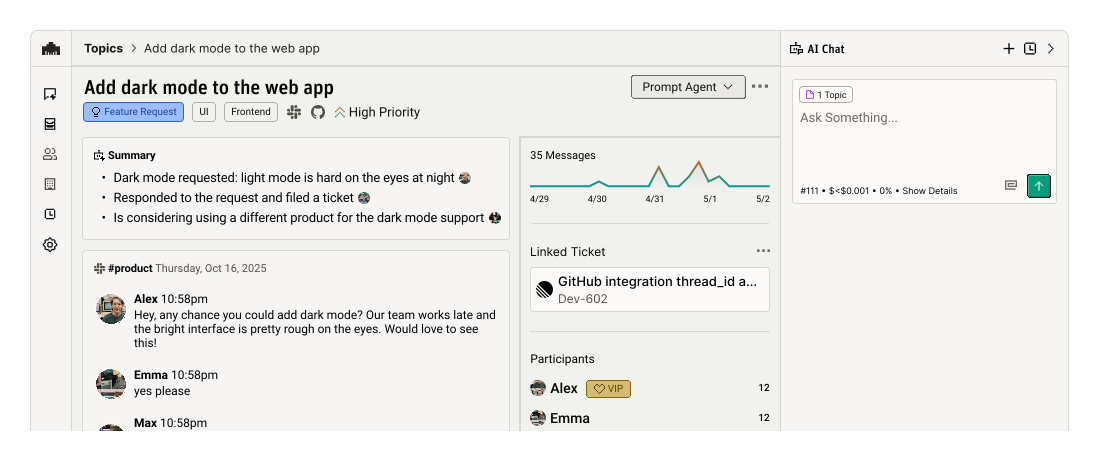
Built on a real-time discussion graph
Long-term memory sourced from user and team discussions
No tagging, no triaging — it just organizes itself
Semantic search that finds what you mean, not just what you type
Curate the context. Don't cram it.
Curated beats crammed
Pasting every thread into a prompt burns the context window before the agent starts. Modem hands over the merged topic instead, sized to fit.
Two kinds of memory
Session context clears when the run ends. Customer memory should not. Modem keeps topics, people, and companies durable, so every new session starts current.
The same question, grounded
Ask an agent what customers think of exports and it guesses. Give it the graph and it answers with counts, affected accounts, and the exact quotes.
What context engineering means for your agents
An agent is only as good as what it can see. Context engineering is the work of deciding what that is, for every run. Modem does the customer half of that work. It reads Slack, Discord, support tickets, sales calls, and issues, merges them into a customer context graph, and serves the merged picture to any agent that asks over the Modem MCP server. Your agents stay current without anyone pasting threads into prompts.
Current, not snapshotted
The graph updates as feedback arrives, so an agent asking today gets today, not the state of the export from last quarter.
Shared across agents
Claude Code, Cursor, and the Modem agent in Slack all read the same graph, so every tool answers from the same facts.
Pull, not paste
Agents query for what a task needs over MCP instead of receiving everything up front, which keeps the context window for the work.
Common questions about context engineering
What is context engineering?
Context engineering is deciding what an agent sees before it starts work. Instead of pasting raw threads into a prompt, you give the agent curated, current context. For customer-facing work that means the merged picture of what customers said, who they are, and what they pay for.
How is agent memory different from RAG?
RAG retrieves documents that look similar to the question. Memory holds structured facts that stay true between sessions, like which customers hit a bug and what plan they are on. Modem maintains that structure for you, so a query returns joined facts instead of lookalike text.
How do agents connect to Modem?
Over MCP. Run `claude mcp add --transport http modem https://mcp.modem.dev/mcp` in Claude Code, or register the same endpoint in Cursor, Devin, or any MCP-compatible agent. For scripted access there is an official CLI on npm, @modem-dev/cli.
Close the product gap