One graph under every customer conversation
Modem links topics, people, and companies across every channel where feedback lands, then hands the merged picture to your team and your agents.







See it on your own data.
Because coding isn't the slow part
Teams are still spending too many cycles chasing down feedback, curating their backlog, and following up with users. Tedious work often done by a single person who holds all the context and bottlenecks execution. Modem fixes that.
Build what's actually important
Every bug report, every feature request, automatically clustered and prioritized
Unified company & user profiles to understand who matters and who can wait
Spot emerging trends before they become fires
 New Conversation
What are the biggest issues my customers are facing?


Here are three conversations from this week with lots of activity and high priority customers:


 High
High

 High
High Medium
 Product
I've been encountering frequent timeout errors when trying to search in the web app
@modem can you make a ticket for this, include any other relevant conversations, and assign me?
Done! This problem has been mentioned by two external customers as well. I've included a rollup in the ticket.

Timeout issues when searching in web app
Issue ENG-2831 in Linear
Multiple customers have reported timeout errors when searching in the web app. Here is...

Act on problems you didn't know you had
Get alerted to user concerns as they happen, not days later
Create detailed tickets automatically or straight from chat
Delegate tasks to coding agents with the context they need to be successful
Close the loop at scale
Notify customers when their requests ship
Generate user-tailored release notes from GitHub PRs and Linear tickets
Automate personalized recurring digests, triage reports, and more in plain English
New ConversationCan you send our customers release notes every Monday at 9am based on what we've merged?
I created a scheduled task to post release notesfor your customers based on your team's Github and Linear history:
Post Release Notes
Every Monday at 9am PT
Would you like me to ask you first with the notes for approval?
Not just an agent – a multiplayer platform
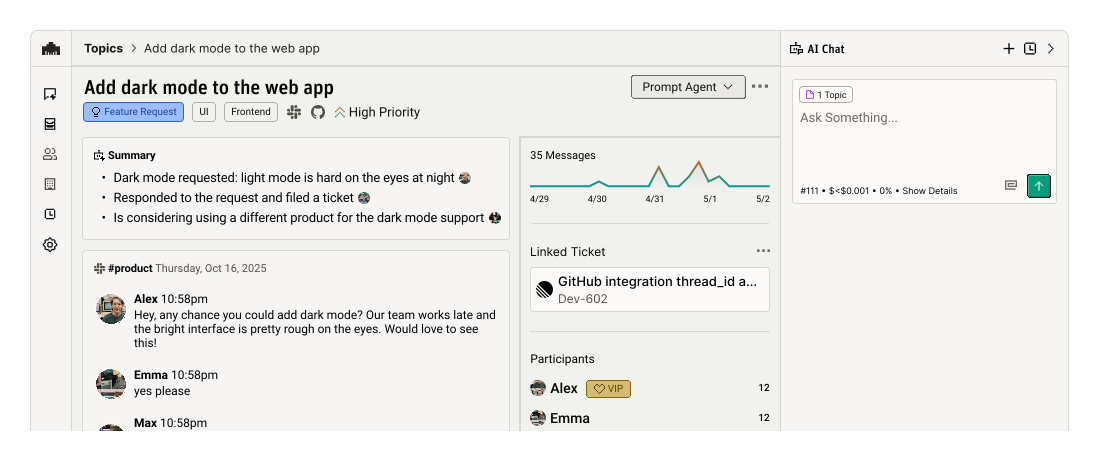
Built on a real-time discussion graph
Long-term memory sourced from user and team discussions
No tagging, no triaging — it just organizes itself
Semantic search that finds what you mean, not just what you type
From raw channels to a queryable graph
Scattered messages become one graph
Modem reads every channel you connect and links what it finds. Duplicate reports merge into topics, and each topic keeps the original quotes.
Every channel lands on the same topic
A bug reported in Discord, Zendesk, and a Gong call is one topic with three sources. Counts stay honest because nothing gets counted twice.
Your agents query it over MCP
Claude Code, Cursor, and anything speaking MCP can ask the graph directly, so a task arrives with the affected customers and their exact words attached.
What a customer context graph is
A context graph stores customer feedback as relationships. The same issue reported in three channels becomes one topic with three sources. The person who emailed support and the person in your shared Slack channel resolve to one customer, linked to their company, plan, and history. Modem builds this graph automatically from the sources you connect and keeps it current as new feedback arrives. For the full concept, including what you can build by hand and where that breaks down, read the guide on what a customer context graph is.
Joined at capture time
Deduping and linking happen as each message arrives, not as a research project when someone finally asks a question.
Quotes stay attached
Every topic keeps the original customer words, so no summary paraphrases away the detail an engineer needs.
Accounts in the picture
Requests tie back to companies, plans, and revenue, which turns "12 people asked" into a prioritization argument.
Common questions about context graphs
What is a customer context graph?
A customer context graph stores feedback as relationships instead of rows. Topics, people, and companies are linked across every channel where feedback lands, with the original quotes attached. Modem builds one automatically from the sources you connect.
How is a context graph different from tags?
Tags label rows but do not connect them. Two tickets tagged exports still do not know they are the same issue or the same customer. A graph makes those joins at capture time, so counts and customer lists stay accurate as feedback arrives.
Can my agents query the context graph?
Yes. Modem exposes the graph over MCP at mcp.modem.dev and through the @modem-dev/cli package on npm. Claude Code, Cursor, Devin, and any MCP-compatible agent can search topics, pull customer history, and ask questions against it.
Close the product gap