Does Gong's Salesforce Integration Actually Get Feature Requests to Your Product Team
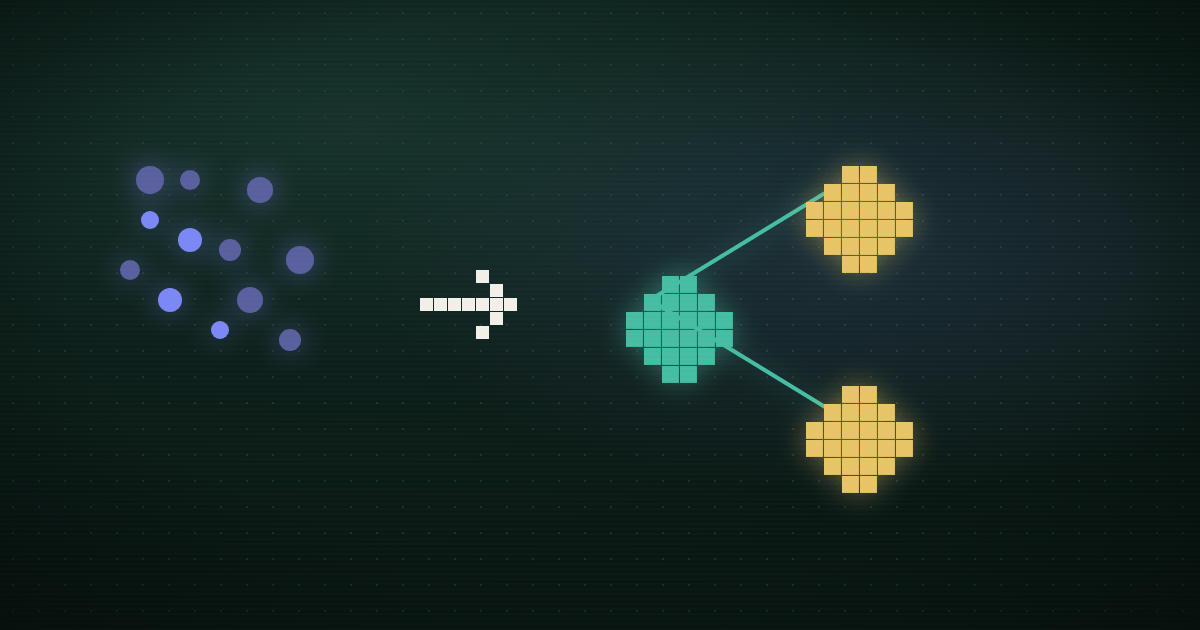
No. The Gong-Salesforce integration writes call activity into Salesforce so sales and CS can see it there, and depending on setup that activity can carry real content, including the AI-extracted topics and trackers Gong pulled from the call. What it doesn't do is decide that a mention is a feature request, count how many other calls mentioned the same thing, or put it anywhere your product team already looks. The request lands in a CRM record built for reviewing a deal, not a queue built for prioritizing a roadmap.
That's a meaningful distinction, because "the data reaches Salesforce" and "the data reaches product" are two different claims, and the integration only makes the first one true.
What the integration actually syncs
Gong's Salesforce integration does two separate things, and mixing them up is where the confusion starts.
The first is lightweight: Gong exports calls, meetings, and emails as Salesforce Tasks or Events, logged against the right Lead, Contact, or Opportunity. Gong's own docs are specific about what rides along: "the data exported includes details such as when the call took place, how long it lasted and what the call resolution was." The transcript is explicitly not included at this layer. This is activity logging, full stop, the same kind of record a manually-typed call note would leave.
The second is richer, and it's the part most people don't realize exists until they go looking for it. Installing the Gong for Salesforce app adds a dedicated custom object called Gong Conversation, and Gong's documentation describes what a record actually holds: the call recording, call metadata, "Gong analytics, including topics, trackers, and interaction stats," next steps, and a full transcript when available. Inside Salesforce, a Highlights tab puts that same AI-extracted content on the record itself, so nobody has to open the full transcript to find it.
So if a customer says "we need SSO before we can roll this out" on a call, and you have a Smart Tracker watching for that concept, the mention can end up sitting inside a Salesforce record with the transcript attached. The sync is not the gap.
Who's actually looking at that record
The gap is who has a reason to open it. Gong's own pitch for the Salesforce integration is built entirely around sales and revenue work: combining Gong and Salesforce data into pipeline, account, and deal-level reports, tracking revenue risk across CRM stages, catching an end-of-quarter surprise before it happens. Product and engineering don't appear anywhere in that pitch. A Gong Conversation record lives under an Opportunity or Account, in a system product teams don't have a login for and wouldn't think to check.
Even a product manager with Salesforce access hits a second wall. Nothing rolls records up. If the same SSO request comes up on five calls across five accounts, that's five separate Gong Conversation records, each buried under its own deal. Salesforce has no native concept of "eight people asked for this," because a Gong Conversation is scoped to one call, not one theme. Counting them means running a report, and running that report means someone in product knew to ask the question first.
 “we need SSO before rollout”
 “any update on single sign-on?”
 “SSO came up twice on this call”
 Linear issue, quotes attached
 insight report in Notion
How this actually plays out
Three calls into a renewal cycle with a mid-size customer, Callan Briggs had heard the same request twice. Fluxgate Robotics sells fleet-management software to warehouse operators, and Callan has run its mid-market accounts for three years, and the customer wanted to export inventory counts on a schedule instead of pulling them by hand every Monday.
He mentioned it in Slack to Roman Delacroix, Fluxgate's head of product.
Callan: Heads up, [Customer] asked about scheduled exports again today. Third time I've heard it from them. It's in the Gong Conversation record if you want the exact wording, logged against their Opportunity.
Roman: I don't have a Salesforce login. Can you paste the quote?
Callan: Sure, one sec. Also, I think two other accounts asked for something similar last quarter, but I'd have to dig through their records to check. No idea how many total.
Roman got the one quote he asked for. What he didn't get, and had no path to get without someone manually pulling Opportunity-level reports across every account, was the count of how many customers and calls it was, and whether the wording overlapped enough to be the same request. The integration had done its job. The call was logged, the mention was in the transcript. The roadmap question still had no answer.
What breaks as request volume grows
Below a handful of requests a quarter, an AE flagging things in Slack the way Callan did is a fine system. It breaks down for a predictable set of reasons:
- Nobody in product has Salesforce access by default, and giving a full seat to a product team just to read call notes is a heavier ask than it sounds.
- There's no dedup. Each Gong Conversation record stands alone. Counting how many accounts asked for the same thing means someone running a cross-Opportunity report, by hand, on a hunch that a pattern exists.
- Nothing routes to a tracker. A request identified by a Smart Tracker or read off a transcript doesn't become a Linear or Jira issue on its own; a human still has to notice it, decide it's worth filing, and type it in.
- The trail stops at the sales team. When the feature ships, there's no requester list waiting inside Salesforce to notify; someone has to remember which accounts asked and go find them.
Past a few dozen mentions a month across calls, chat, and support tickets, this is the point where teams stop relying on someone remembering to flag things and add a layer that reads the sources directly. That's the category we work in. Modem reads Gong call transcripts alongside Slack, support tickets, and email, extracts the request regardless of whether a tracker was trained to catch that exact phrasing, and matches it against every other mention of the same ask by meaning, not by which Opportunity it happened to be logged under. A request mentioned on three calls and two support tickets becomes one topic with a count of five and every quote attached, filed as a Linear or Jira issue with the requester list riding along. When it ships, that list is who gets told. Details on the Gong integration and the matching Salesforce integration, which adds plan and revenue context to the same topic rather than replacing what Gong already does well on the call-review side. We build Modem, so weigh that against the alternative of building the cross-Opportunity report yourself.
A cheaper fix if you're not there yet
If a dedicated layer isn't justified yet, the fix that costs nothing is procedural: agree that anyone who hears a request on a call posts it to one shared channel or doc, not just a private Slack ping to whoever's around. That single habit surfaces the count Salesforce won't compute for you, and it works whether or not everyone involved has a Gong seat. It's also exactly the gap covered in more detail in why doesn't Salesforce have a native feature request tracker and, for teams relying on Gong's own tracker mechanism to catch these mentions in the first place, why Gong's Smart Trackers miss feature requests.
